

Review finds Florida law provides paths for Fernandina downtown taxing district
- Mike Lednovich
- 2 days ago
- 5 min read


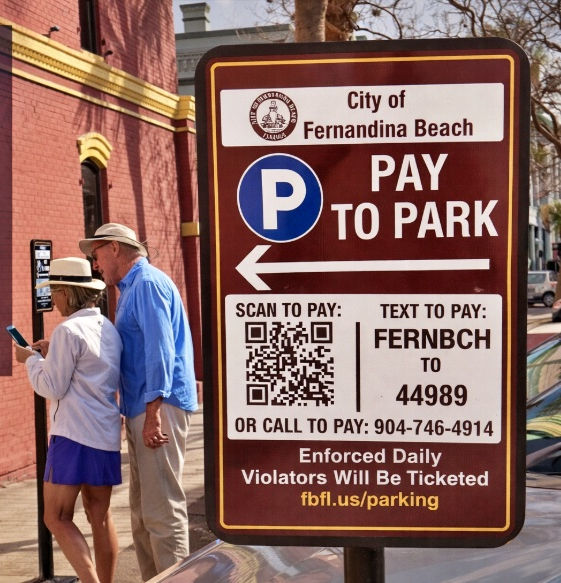
FERNANDINA BEACH - As city commissioners moved Wednesday to terminate the city’s controversial paid parking program, Commissioner Genece Minshew proposed investigating a special downtown taxing district as a potential source of replacement revenue.
During her opening statement, Minshew asked City Attorney Teresa Prince to determine whether the city could legally establish a district in which downtown property owners would pay an additional tax or assessment to finance downtown services and improvements.
"If the downtown business district requires substantial and continuing investment, and if the community does not want visitors contributing through paid parking, then we should determine whether a dedicated downtown taxing district is an appropriate way to fund these needs," Minshew stated. "So again, I'm asking the City Manager and the City

Attorney to bring back to this Commission options for establishing such a district within the Central Business District. This would include legal requirements, potential boundaries, projected revenues, and impact on property owners."
The Fernandina Observer submitted the same question to artificial intelligence and directed it to review Florida statutes, court decisions and examples from other Florida cities.
The research found that Florida law provides possible ways for Fernandina Beach to establish such a district. It also found significant legal restrictions that could prevent the city from simply ordering downtown property owners to replace all the revenue lost by ending paid parking.
The AI findings are not a legal opinion.
Whether a particular Fernandina Beach proposal would be lawful would require a formal analysis by Prince or other Florida local-government counsel.
One possible approach would be a dependent downtown improvement district created by city ordinance.
Section 189.02 of Florida Statutes authorizes a municipality to create a dependent special district within its boundaries. The establishing ordinance must identify the district’s boundaries, purpose, powers, duties, governing structure and financing method. It must also explain why a district is the best alternative and declare that its creation is consistent with the city’s comprehensive plan.
The City Commission could govern the district directly or appoint a downtown board while retaining the control necessary for the district to remain dependent on the city.
Creating the district and imposing a tax are separate legal questions.
Florida law recognizes municipal dependent special district millage. The City Commission, rather than an appointed district board acting independently, would establish the millage through the annual property-tax process.
Any district millage would count with the city’s general millage toward the maximum millage applicable to the city. The tax rate would have to be uniform throughout the defined district.
Although Section 189.02 allows a city to create a dependent district by ordinance without requiring a referendum, Florida’s property-tax law imposes an additional requirement when a dependent district levies millage for the first time.
Under Section 200.065, the initial millage must be approved unanimously by the City Commission or approved by voters in a referendum. Prince would also need to determine the precise legal authority for the proposed tax and examine the City Charter and other applicable limitations.
A second possible approach would be a business improvement area financed through non-ad valorem special assessments.
Unlike an ad valorem tax, a special assessment is imposed to pay for a service or improvement providing a special benefit to the assessed property.
The Florida Supreme Court has established a two-part test for determining whether such an assessment is valid: The assessed property must receive a special benefit, and the cost must be fairly and reasonably apportioned among the properties receiving that benefit.
The court stated that test in Sarasota County v. Sarasota Church of Christ.
That requirement means Fernandina Beach could not simply calculate the amount of lost parking revenue and divide it among downtown property owners.
The city would have to identify specific services or improvements benefiting the assessed properties and develop a defensible method for distributing the cost. Depending on the program and supporting legal authority, those benefits might include enhanced cleaning, security, landscaping, lighting, pedestrian improvements, marketing, public-space programming or downtown ambassadors.
An assessment formula could consider taxable value, square footage, street frontage, property classification or a combination of factors. The formula would have to bear a reasonable relationship to the benefits received.
Chapter 170 of Florida Statutes expressly authorizes municipal special assessments for certain physical improvements, including streets, sidewalks, lighting, landscaping, street furniture, signage, parks and parking facilities.
The Chapter 170 process includes an initial resolution, plans and cost estimates, a preliminary assessment roll, published notice and a hearing at which affected owners may challenge or seek adjustments to their assessments.
If the city used Chapter 170 to finance an off-street parking lot, parking garage or similar facility, the law requires approval by a majority of the affected property owners.
Section 197.3632 provides a uniform method for collecting non-ad valorem assessments on annual property-tax bills. Its procedures include notice to affected property owners and a public hearing when the uniform collection method is first used.
Before determining whether a similar district would work in Fernandina Beach, the city would need to define its boundaries and identify the services or improvements it would finance. It would then need to obtain the taxable values and classifications of properties within the proposed boundaries and calculate what tax or assessment would be necessary.
If the city pursued a special assessment, it would likely need a professional benefit and apportionment study showing how assessed properties benefit and why the proposed distribution of costs is reasonable.
The city would also have to decide which properties would be assessed. Homestead protection does not automatically exempt residential property from a non-ad valorem special assessment. Government, religious and nonprofit properties would require analysis based on their tax status, the proposed assessment and whether they receive the legally required benefit.
The proposal would also shift who pays for downtown services.
Paid parking fees were paid by people using downtown parking, including visitors and noncity residents. A downtown tax or special assessment would shift much of the expense to property owners within the district. Depending on lease provisions, commercial landlords could pass those costs to their tenants.
Revenue generated through the district would also have to be used for its authorized purposes. Special-assessment revenue, in particular, must finance services or improvements that provide a special benefit to the assessed properties.
Florida law and the experience of other cities show that Minshew’s proposal is possible in concept. Whether Fernandina Beach can implement it—and how much paid parking revenue it could lawfully replace—will depend on its structure, boundaries, financing method and intended expenditures.
Prince’s review will determine which, if any, of those legal paths is available to the city.
Several Florida cities operate comparable downtown districts.
Sarasota established its Downtown Improvement District in 2008 through City Ordinance 08-4832. The city identifies it as a dependent special district with ad valorem taxes as its revenue source.
Jacksonville operates the Downtown Vision Business Improvement District. For the 2025-26 fiscal year, city budget documents identify its charge as a non-ad valorem assessment and use a rate of 1.1 mills. Although expressed in mills and calculated using property value, it is legally classified as a non-ad valorem assessment.
Miami re-established the Wynwood Business Improvement District in 2023 as a special assessment district for a 10-year period. Its continuation was subject to approval by a majority of affected property owners. City records show the district was established through Chapter 170 procedures, including a preliminary assessment roll and a hearing.


Comments