

City Weighs Higher Property Tax Rate After Fernandina Beach Rejects Paid Parking
- Mike Lednovich
- Aug 30
- 3 min read

By Mike Lednovich/Editor
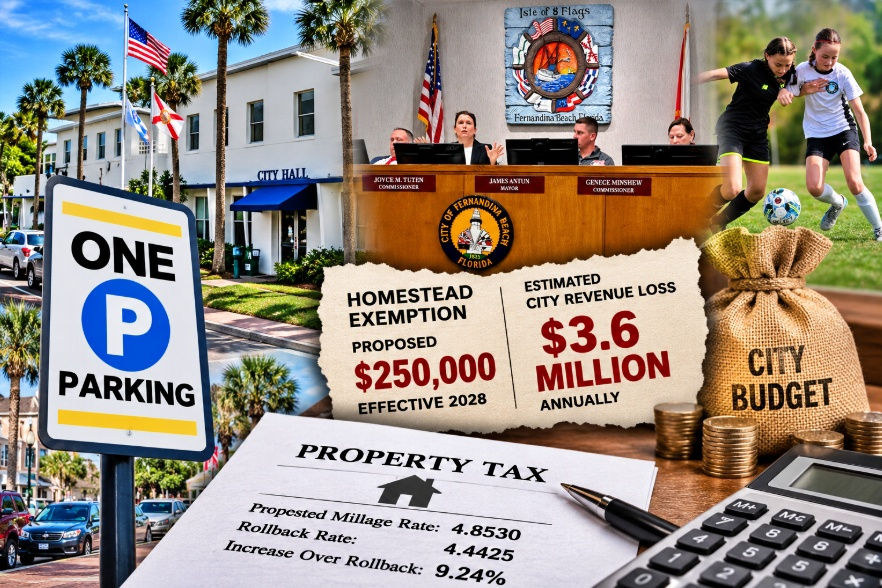
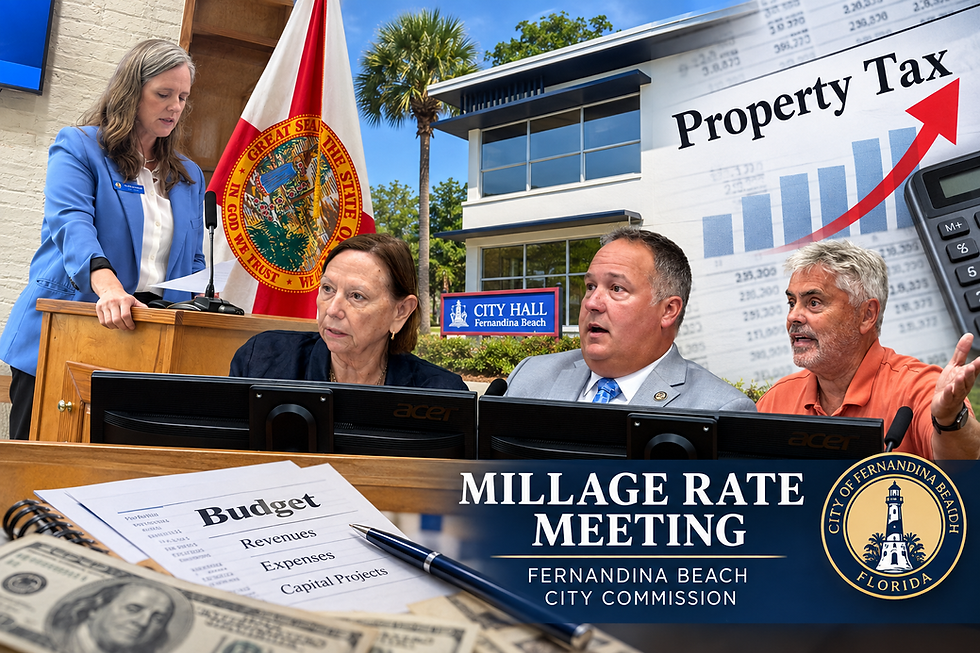
FERNANDINA BEACH - City Commissioners will consider Thursday whether to impose a 2026-27 property tax rate 9.24% above the rollback rate, a decision that comes just two weeks after commissioners voted to eliminate a paid-parking program expected to provide $1.5 million for waterfront improvements.
The City Commission will hold a special meeting and public hearing Sept. 3 at 5 p.m. to review a proposed operating millage rate of 4.8530 mills, or $4.853 for every $1,000 of taxable property value.
The city's rollback rate is 4.4425 mills. Under Florida's Truth in Millage law, the proposed rate represents a 9.24% increase in property taxes over the rollback rate.
The rollback rate is the rate calculated to generate approximately the same property tax revenue as the previous year from existing property, excluding new construction. That means a city can reduce its millage rate from the previous year and still have what state law defines as a tax increase because rising property values generate additional revenue.
At 4.8530 mills, city property taxes would amount to $485.30 for every $100,000 of taxable value, before taxes levied by the county, School Board and other taxing authorities are included. At the rollback rate, the city tax on the same $100,000 of taxable value would be $444.25 — a difference of $41.05.
The proposed rate has taken on greater significance because of what has happened since commissioners established it as their tentative maximum millage rate in July.
At the July 28 meeting, City Manager Sarah Campbell told commissioners that 4.8530 mills would increase property tax collections by approximately $1.5 million. She said that number was specifically selected because the city had allocated $1.5 million in anticipated paid-parking revenue to its waterfront redevelopment project.
The higher tentative rate essentially provided commissioners with a financial fallback if paid parking disappeared.
On Aug. 18, approximately 75% of those Fernandina Beach voters who cast ballots approved a referendum rejecting paid parking. The following night, commissioners voted 4-1 to terminate the city's contract with One Parking.
Paid parking, however, did not end immediately. The contract requires 90 days' notice, and the city has announced that the downtown paid-parking program will remain in effect through Nov. 18.
The decision nevertheless eliminates a revenue source the city had counted on to help finance waterfront improvements, leaving commissioners to determine whether to replace some or all of that money with property taxes, reduce spending, delay projects, use other revenue or reserves, or employ some combination of those options.
The 4.8530-mill rate before commissioners Thursday is the same rate Campbell previously connected to replacing the $1.5 million in anticipated parking revenue.
Commissioners also face another potentially much larger property tax issue — this one controlled by voters statewide rather than the City Commission.
Florida voters in November will consider a constitutional amendment that would substantially increase the homestead exemption from property taxes imposed by cities, counties and other local governments.
The proposal would increase the non-school homestead exemption to $150,000 beginning Jan. 1, 2027, and $250,000 beginning Jan. 1, 2028. The additional exemption would not apply to school district property taxes.
The proposal would therefore not immediately impose the full financial impact on the 2026-27 city budget commissioners are now considering. But if voters approve it, the change would reduce Fernandina Beach's property tax base beginning next year, with the larger impact occurring when the $250,000 exemption takes effect in 2028.
Florida League of Cities data estimate that a $250,000 homestead exemption would remove approximately $741.4 million from Fernandina Beach's taxable property value, a 15.6% reduction in the city's overall taxable value.
At the proposed 4.8530-mill rate, $741.4 million in taxable value represents approximately $3.6 million in annual city property tax revenue, before collection-rate adjustments and other factors.
The proposed constitutional amendment also contains other property tax provisions, including reducing the annual assessment-growth cap on non-homestead property from 10% to 5%.
The potential loss is particularly significant because property taxes are the city's largest recurring General Fund revenue source.
Commissioners Thursday will consider both the proposed millage rate and the city's tentative 2026-27 budget.
Thursday's votes will not be the final action on either.
The city has scheduled its final public hearing on the 2026-27 millage rate and budget for Sept. 15 at 5:05 p.m.
Commissioners can lower the 4.8530-mill rate before final adoption. The final millage rate cannot exceed the tentatively adopted rate.
The decisions leave commissioners balancing an immediate revenue loss against the possibility of a much larger one ahead.


Comments