

Fernandina Staff Told Owner He Could Divide Property Then the City Changed Its Mind
- Mike Lednovich
- Jun 2
- 4 min read

Board to consider variance after parcel owner demolished his house and barn with staff approval then City had to reverse the decision

By Mike Lednovich/Editor
FERNANDINA BEACH – The Fernandina Beach Board of Adjustment on Thursday will consider a variance request that would allow a property owner to divide a vacant Stanley Drive parcel into two residential lots despite a Land Development Code provision that prohibits such a split after a property has been developed and later cleared.
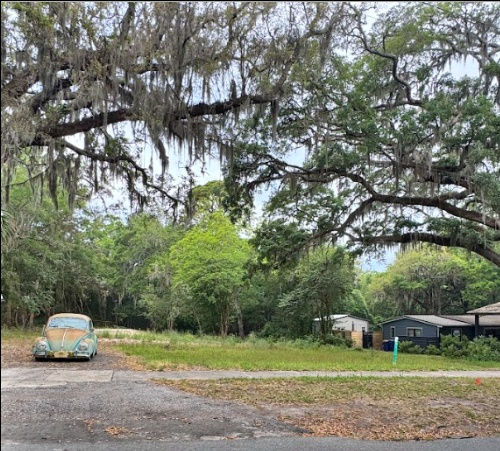
The controversy involves property owner Eric Corbett's .47-acre parcel at 409 Stanley Drive, a corner lot bounded by Stanley Drive and Highland Dunes Way. Corbett is seeking relief from Land Development Code Section 1.03.05, which governs the construction or demolition of structures on lots that have previously been developed.
According to the city staff report, the property contained a house and pole barn that were demolished in August and September 2025. The site is now vacant. Corbett says he intends to build a home on one of the resulting lots and sell the second lot to a family member for construction of another home.
A key issue in the case is the role city staff played before the structures were demolished.
The staff report states that after purchasing the property, Corbett met with the Planning and Conservation Department to discuss his plans to demolish the existing structures and divide the property into two lots. According to the report, he received verbal confirmation from multiple city staff members that the lot could be divided if it met R-1 zoning standards.
Only later, after Corbett submitted a lot line adjustment application in October 2025, did city officials determine that Land Development Code Section 1.03.05 applied to the property. The report states that the Planning Manager Margaret Pearson and City Attorney Teresa Prince concluded that because a residence and accessory structures had previously existed on the lot, the parcel constituted a single "lot of record" under the code and could not be separated without approval from the Board of Adjustment.
A subsequent meeting was held involving Corbett, the city attorney and planning staff, where officials reaffirmed that interpretation and advised Corbett to seek a variance from the Board of Adjustment.
The code section at issue - 1.03.05 - states that once a residential dwelling or accessory structure has been constructed on one or more platted lots, those lots become a single building site and remain so even if the structures are later demolished. Any separation of the building site requires approval through the variance process.
If approved, the variance would allow the existing 100-foot-by-203-foot lot to be divided into two separate parcels measuring approximately 100 feet by 100 feet and 100 feet by 103 feet.
In his application, Corbett argues that the situation is unique because Highland Dunes Way was constructed decades after the original 1950 Forest Hills subdivision plat was recorded. The newer road now provides frontage and access that makes two separate homesites feasible.
He also contends that the code section may have been intended to address combined lots rather than a single platted lot such as his property. The property is located within the Forest Hills subdivision, which was platted in 1950. The adjacent Highland Dunes subdivision was developed in 2007 and contains smaller lots than many found in the older neighborhood.
To approve the request, the Board of Adjustment must find that the application satisfies six separate criteria required for a variance under city code. City staff concluded that all six standards are met and recommended approval.
Several city staff findings could draw closer scrutiny from board members.
One requirement states that a literal interpretation of the Land Development Code would deprive the property owner of rights commonly enjoyed by other property owners. Staff found that standard was met because the proposed lots would comply with current R-1 zoning requirements.
However, the code section at the center of the dispute was adopted specifically to prevent lots that have previously contained homes or accessory structures from being separated into new building sites without PAB approval. The ordinance states that once a dwelling or accessory structure has been constructed on a property, the site remains a single "lot of record" even if the structures are later demolished.
Similarly, staff concluded that granting the variance would not confer a special privilege because any property owner may apply for a variance.
But board members could also consider whether allowing the split would effectively create an exception to a code provision that was written to prevent precisely this type of lot division.
The most significant factor in the case may be the city's own role in creating the situation.
According to the staff report, Corbett met with planning staff before demolishing the existing house and pole barn and discussed his intention to divide the property into two buildable lots. The report states he received verbal confirmation from multiple city staff members that the plan could proceed. Only after the demolitions occurred and a lot line adjustment application was submitted did city officials determine that Section 1.03.05 applied and that a variance would be required.
That sequence leaves the Board of Adjustment weighing not only the technical requirements of the code but also a situation in which a property owner relied on city guidance that later proved incorrect.
In meeting documents, City planning staff concluded that the request satisfies all six criteria required for granting a variance, including findings related to special conditions, minimum variance, compatibility with surrounding properties, public interest and consistency with the city's Comprehensive Plan. Staff noted that the proposed lots would remain larger than the minimum dimensions required in the R-1 zoning district and would create a transition between the larger Forest Hills lots and the smaller Highland Dunes lots.
Staff also found that denying the variance would deprive the owner of a property right commonly enjoyed by other owners in the R-1 district because the proposed lots meet current zoning requirements for lot size and density.
As a result, staff is recommending approval of the variance request.


Corbett is making a reasonable request for a variance. Approving the variance is the right thing to do. It's also proper legal procedure to address the situation as it presently stands to ensure all future development is within code. It's not like he plans to build a chemical manufacturing plant on the property...